
Sciatica Treatment in Victoria, MN
Content Reviewed by: Dr. Nathan Servey, D.C. on November 2, 2026
Minnesota Chiropractic License Number: 6295 (NPI: 1932647294)
Sciatica Treatment At A Glance
Sciatica has a way of taking over your day. That sharp, burning, or numb pain that travels from your lower back through your hip and down your leg can make sitting, standing, and even sleeping miserable — and it’s one of the most common nerve problems we help people with here in Victoria.
At Power of Life Chiropractic and Holistic Health, we don’t treat sciatica as a one-size diagnosis. We work to find exactly what’s irritating the sciatic nerve — whether it’s a lumbar disc, a sacroiliac joint, a tight piriformis muscle, or a mix — and build your care around what we actually find, not a guess.
From there, chiropractic adjustments, intersegmental traction, and targeted therapies can take the pressure off the nerve and support real, lasting relief. Many patients feel meaningful improvement within their first several visits.
What Is Sciatica?
Sciatica refers to a collection of symptoms caused by irritation or compression of the sciatic nerve, the longest nerve in the body. The sciatic nerve originates from nerve roots at the L4, L5, and S1 levels of the lumbar and sacral spine, merges into a single nerve in the gluteal region, and travels down the back of each leg to the foot.
When any of the structures along this pathway, including the lumbar vertebrae, intervertebral discs, sacroiliac joints, piriformis muscle, or surrounding soft tissue, compress or irritate the nerve, symptoms follow the nerve distribution. This is what produces the characteristic pattern of pain that originates in the lower back or buttock and travels down the leg.
Sciatica is a symptom pattern, not a standalone diagnosis. Identifying the structure responsible for the nerve irritation is essential, because the treatment approach differs depending on whether the source is a lumbar disc, a spinal joint, a pelvic muscle, or a combination. Treating sciatica without identifying its source typically produces incomplete and temporary relief.


Common Symptoms of Sciatica
Sciatic symptoms are distinctive in their distribution and quality, though they vary depending on which nerve roots are involved and which structure is causing the irritation.
The primary symptom is pain that travels from the lower back or deep buttock down the back of the thigh and into the calf or foot. The pain is often described as sharp, shooting, burning, or electric in quality, and is typically worse with sitting, bending forward, or sudden movement. Some patients experience the leg symptoms more prominently than any back pain, while others have significant lumbar discomfort alongside the leg symptoms.
Numbness and tingling are common companions to sciatic pain. The location of the sensory changes often indicates which nerve root is involved. L4 involvement typically produces symptoms along the inner lower leg and ankle. L5 involvement affects the outer lower leg and top of the foot. S1 distribution involves the outer ankle, heel, and small toes.
Functional impacts include difficulty sitting for extended periods, disrupted sleep from positional pain, reduced ability to stand or walk for long distances, and challenges performing basic tasks such as putting on shoes or climbing stairs. In severe cases, weakness in the leg or foot may accompany the pain and sensory symptoms.
What Causes Sciatica?
Sciatica has several distinct mechanical causes, each of which requires a specific assessment and care approach.
Lumbar disc herniation is among the most common drivers of true sciatic nerve pain. When a disc between lumbar vertebrae herniates or bulges, the extruded disc material can press directly on the nerve root that contributes to the sciatic nerve. This produces sharp, radiating pain that follows the distribution of the involved nerve root.
Sacroiliac joint dysfunction is a frequently overlooked source of sciatic-like symptoms. The sacroiliac joint sits at the junction of the pelvis and sacrum and is closely adjacent to the sciatic nerve. When this joint is restricted or inflamed, it can produce deep gluteal pain and leg symptoms that closely resemble discogenic sciatica.
Piriformis syndrome occurs when the piriformis muscle, a deep external hip rotator that lies directly over the sciatic nerve in the gluteal region, becomes tight or inflamed and compresses the nerve. This presents with deep buttock pain and sciatic symptoms that are aggravated by hip rotation and prolonged sitting.
Lumbar joint restriction, degeneration, or facet joint syndrome can contribute to local inflammation that irritates adjacent nerve roots and produces sciatic symptoms without true disc herniation.
Conditions That Can Mimic Sciatica
Several conditions produce leg pain and lower extremity symptoms that resemble sciatica but have different sources and require different approaches.
Peripheral neuropathy
Peripheral neuropathy produces numbness, tingling, and pain in the feet and legs that can be confused with sciatic symptoms. Unlike sciatica, peripheral neuropathy typically affects both legs in a symmetric stocking-glove distribution and is associated with systemic conditions such as diabetes or nutritional deficiency.
Hip joint pathology
Hip joint pathology, including degenerative joint disease and labral tears, can produce deep gluteal and thigh pain that mimics sciatic symptoms. Clinical examination and specific orthopedic tests for the hip can distinguish hip joint pain from sciatic nerve irritation.
Vascular conditions
Vascular conditions including peripheral arterial disease can produce leg pain during activity that resolves with rest. This claudication pattern differs from true sciatica in that it is consistently activity-dependent and improves reliably with rest, which is not typical of nerve-related leg pain.
When to Seek Urgent Care for Sciatica
Most sciatica responds well to conservative chiropractic care, but some presentations require immediate medical attention. Seek urgent care if your sciatic symptoms are accompanied by loss of bowel or bladder control, sudden onset of significant weakness in the leg or foot, numbness in the groin or inner thighs, or symptoms that develop following significant trauma. These may indicate cauda equina syndrome, a medical emergency requiring immediate evaluation.
What Our Patients Are Saying
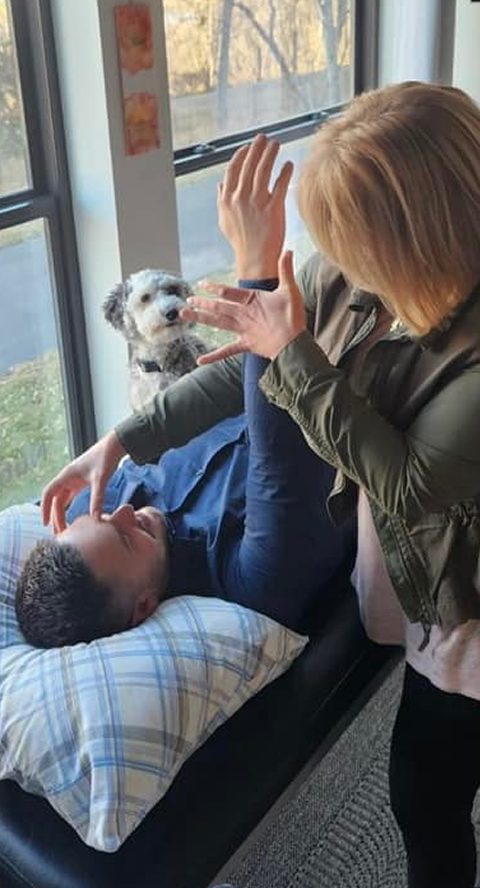
Patients from across Victoria and the southwest metro have found meaningful relief from sciatic pain and nerve symptoms through chiropractic care at Power of Life Chiropractic and Holistic Health.


How We Diagnose Sciatica
Diagnosing sciatica at Power of Life Chiropractic and Holistic Health begins with identifying not just that the sciatic nerve is irritated, but which structure is responsible for that irritation.
We use Insight infrared thermography to assess nerve activity along the lumbar and sacral spine, and muscle EMG testing to evaluate paraspinal and lower extremity muscle response. These objective measurements complement orthopedic and neurological testing including straight leg raise, Kemp’s test, and sacroiliac provocation tests that help identify the structural source.
Palpation of the lumbar spine, sacroiliac joint, and piriformis region allows the chiropractor to identify areas of restriction, inflammation, and soft tissue tension that correspond to the patient’s symptom pattern. When imaging is clinically indicated to confirm a suspected disc herniation or rule out structural pathology, we discuss that with the patient and coordinate the appropriate study.
How Power of Life Treats Sciatica
Sciatica care at Power of Life Chiropractic and Holistic Health is targeted to the specific source of nerve irritation identified during examination. We do not apply a single protocol to all sciatic presentations.
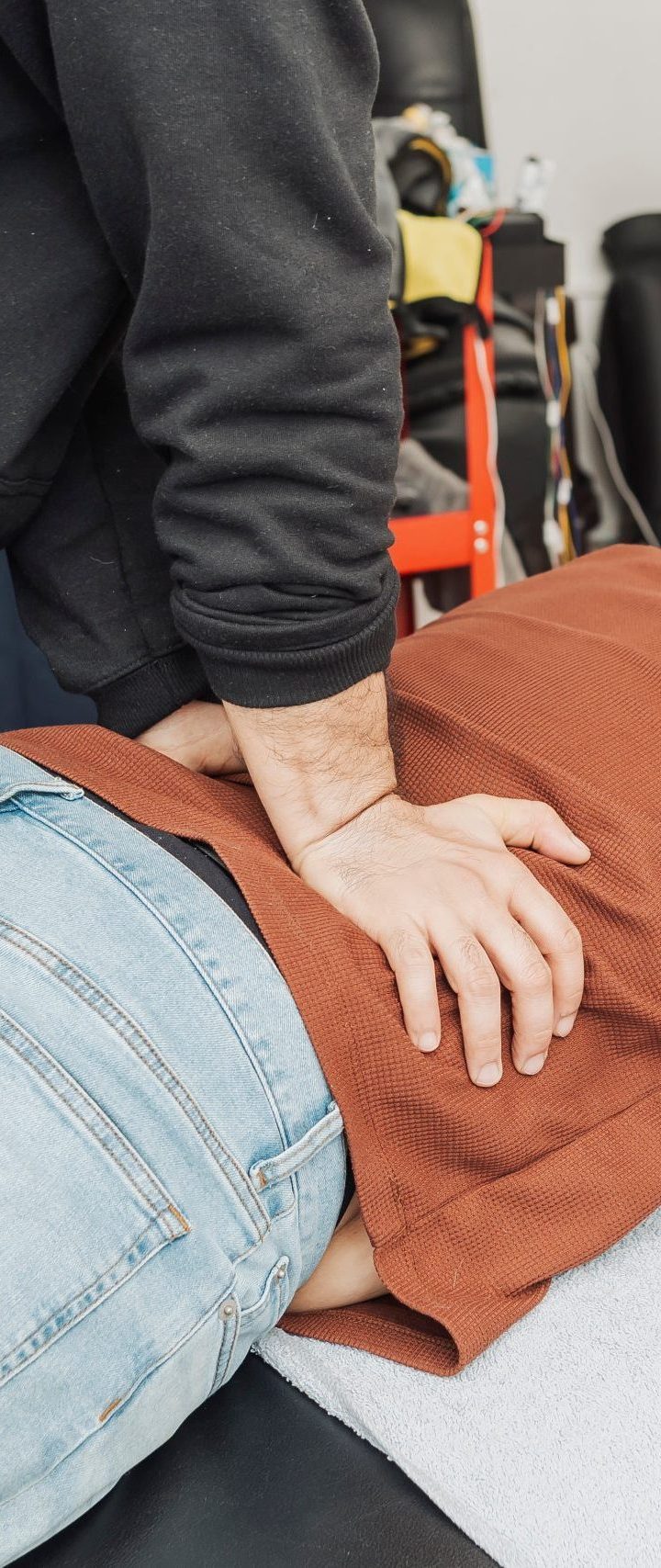
Specific adjustments to the lumbar spine and sacrum address joint restriction and reduce mechanical pressure on the adjacent nerve roots. Technique selection is based on whether disc involvement, facet dysfunction, or sacroiliac restriction is the primary driver.
When sacroiliac dysfunction is identified as the source of sciatic-like symptoms, targeted mobilization of the sacroiliac joint directly addresses the structure driving the nerve irritation.
When piriformis syndrome is contributing to sciatic nerve compression in the gluteal region, soft tissue work targeting the piriformis and deep hip rotators is incorporated alongside adjustments.
Traction is used when paraspinal muscle guarding and lumbar stiffness are significant components of the presentation, particularly in disc-related sciatica where decompressive motion supports disc health and reduces nerve pressure.
Why Early Treatment for Sciatica Matters
Sciatic nerve symptoms that are addressed early respond significantly better to conservative care than those that have been present for months or years.
In the early phase of a disc herniation or joint-related nerve irritation, the inflammatory response around the nerve root is active but not yet chronic. Reducing mechanical pressure on the nerve at this stage can interrupt the inflammatory cycle and allow the nerve to recover without the complications that develop with sustained compression.
Patients who delay care often develop secondary muscle weakness, altered movement patterns to avoid pain, and chronic sensitization of the nerve that requires more intensive and prolonged treatment to reverse. Early evaluation establishes the structural cause and begins conservative management while the window for efficient recovery is still open.
Serving Victoria, Waconia, Chaska, and Nearby Communities
Power of Life Chiropractic and Holistic Health is located at 1700 Stieger Lake Ln, Victoria, MN 55386. We evaluate and treat sciatic nerve symptoms for patients from Victoria, Waconia, Chaska, Chanhassen, Minnetrista, and Carver.
Meet The Team

Dr. Kandace Johnson, D.C.
Owner, Chiropractor & NRT PractitionerDr. Kandace Johnson is a Partner and the founder of Power of Life Chiropractic and Holistic Health. She realized, through her own health challenge (IBS & Migraines) that finding the CAUSE to symptoms is the most effective approach to healing.
Learn More
Dr. Nathan Servey, D.C
Owner & ChiropractorDr. Nathan Servey is an owner and partner at Power of Life and a graduate of Northwestern Health Sciences University in Bloomington, where he earned his Doctor of Chiropractic degree.
Learn MoreSources and Clinical References
The references below support sciatica definitions, common spinal causes, neurological warning signs, and conservative-care options.
Source: Mayo Clinic: Sciatica — Supports: sciatica symptoms, causes, risk factors, and urgent warning signs.
Source: NCBI Bookshelf: Sciatica — Supports: lumbar nerve-root irritation, examination, differential diagnosis, conservative care, and referral.
Source: NCCIH: Spinal Manipulation: What You Need To Know — Supports: limited and cautious evidence regarding manipulation for sciatica and back-related leg pain.
Frequently Asked Questions About Sciatica
Book Sciatica Treatment in Victoria, MN
Sciatic pain that travels down your leg every time you sit, walk, or bend is telling you something worth investigating. A complimentary consultation at Power of Life Chiropractic and Holistic Health gives you an honest assessment of what is driving your nerve symptoms and a care plan built around those specific findings. Call (952) 443-9000 or book online.